Translation and Notarization of Wenzhou COVID-19 Vaccination Certificates for Biotechnology Promotion Services
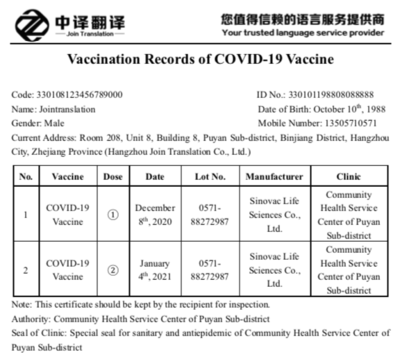
For international travel, academic exchange, business activities, or participation in global biotechnology promotion services, individuals who have received COVID-19 vaccinations in Wenzhou, China, often require an officially translated and certified copy of their vaccination proof. This document serves as a critical credential, verifying one's vaccination status in a format recognized by foreign institutions, immigration authorities, and international organizations.\n\n1. Understanding the Requirement:\nThe core need is to convert the original Chinese vaccination certificate (typically issued by local CDC or hospital, showing details like recipient's name, ID/passport number, vaccine brand, doses, and dates) into accurate, professional English. More importantly, this translation must be accompanied by an official seal or notarization to attest to its authenticity and the translator's qualifications, making it legally and formally acceptable abroad.\n\n2. The Translation Process:\nA professional translation service or a certified translator should handle this task. The translation must be precise, including all personal details, medical terms (e.g., vaccine names like Sinovac-CoronaVac or Sinopharm-BBIBP), batch numbers, and official stamps from the Chinese issuing authority. Formatting should mirror the original to avoid confusion.\n\n3. Official Certification and Sealing:\nAfter translation, the document needs certification. In China, this is typically done through:\n- Notary Public Offices (公证处): They can notarize the authenticity of both the original certificate and its translation. The notary will affix a seal and provide a notarization certificate in Chinese and possibly English.\n- Authorized Translation Companies: Some agencies have official chops (seals) recognized for such purposes.\n- Local Foreign Affairs Offices or Health Departments: In some cases, they may provide endorsement.\nThis step is crucial for \
如若转载,请注明出处:http://www.nzjhzq.com/product/4.html
更新时间:2026-03-23 06:09:15